
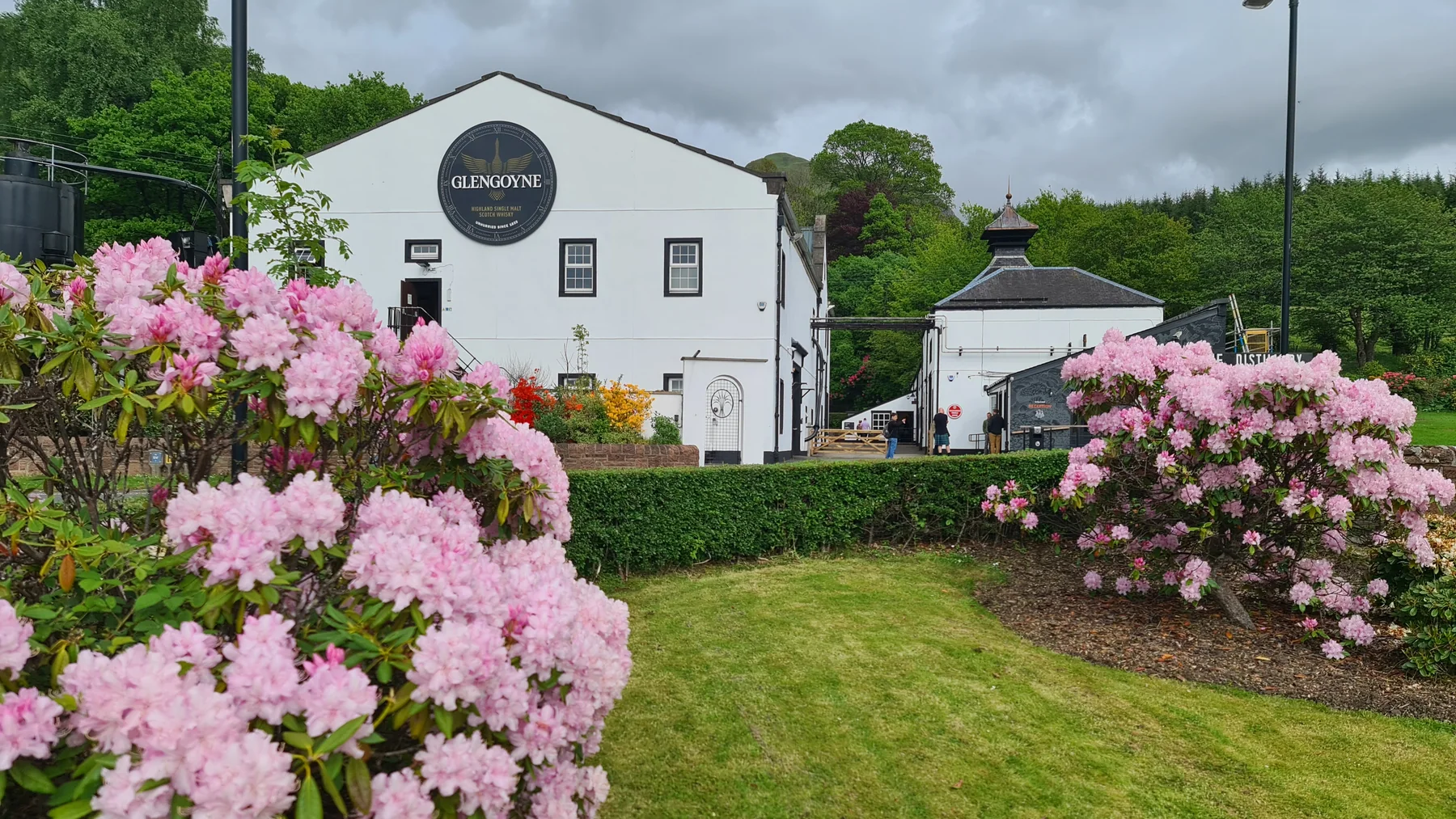
About Glengoyne Distillery
Glengoyne Distillery stands at Dumgoyne, north of Glasgow, immediately beside the Highland Boundary Fault. Spirit is distilled on the Highland side of the road while warehouses lie across it in the Lowlands, giving the site an unusually visible relationship with Scotland’s regional geography.
The licensed distillery dates from 1833 and was originally known as Burnfoot. The current Glengoyne name developed later, so the history of the physical site begins before the brand name familiar today. “Glen of the wild geese” is the interpretation used in modern accounts of that name.
History
A distillery was established on the site in 1833 under George Connell and the Edmonstone estate. Control passed to the MacLelland family in the nineteenth century before Glasgow blender Lang Brothers acquired the business in 1876. Burnfoot became Glen Guin and then Glengoyne during Lang ownership.
Sources vary between 1905 and 1907 for the final adoption or registration of the Glengoyne spelling. Rather than selecting one date without stronger evidence, it is safer to place the change in the early twentieth century and distinguish it from the 1833 start of licensed distilling.
Robertson & Baxter acquired Lang Brothers in 1965 and later became part of the Edrington group. A rebuilding programme increased the still count from two to three. Ian Macleod Distillers bought Glengoyne and the Langs brand in 2003, beginning the current period of independent family-company ownership.
The ownership sequence explains why Glengoyne has both a longstanding site history and a modern brand presentation built under Ian Macleod. It has not remained with one family since foundation, and the name itself was not used throughout the entire life of the distillery.
What makes it distinctive
Glengoyne dries its malted barley with warm air rather than peat smoke. This does not mean peat has no relationship with the local landscape; it means smoke is not deliberately introduced during kilning as a major flavour source. The resulting new make is therefore designed around fruit and cereal character rather than phenolic intensity.
The distillery operates three stills and emphasises a deliberately slow distillation rate. Slower flow and the still arrangement encourage copper interaction and reflux, helping to produce the fruit-led spirit described by the house. The claim is about how the stills are run, not simply the age of the equipment.
Cask preparation is another central part of the Glengoyne identity. The distillery uses sherry-seasoned oak extensively and states that preparing selected casks can take several years. American and European oak, first-fill and refill wood, and different maturation periods create variation across the range.
Whisky character and significance
Glengoyne is associated with apple, citrus and malt in younger spirit, developing honey, dried fruit, spice and oak through maturation. The absence of peat smoke and the slow distillation distinguish it from smoky Highland or island malts, while sherry-cask influence separates many bottlings from purely bourbon-matured styles.
Its geographical position also makes the distillery a useful case study in regional labels. Distillation and maturation happen within metres of one another but on opposite sides of a conventional Highland-Lowland divide, demonstrating that production character cannot be explained by a region name alone.
Visiting Glengoyne Distillery
Glengoyne has a developed visitor centre with guided distillery and tasting experiences. Current formats and access should be checked directly. The site is comparatively accessible from central Scotland, but advance arrangements remain important because popular sessions can fill.
Location and surrounding area
Dumgoyne lies near Killearn on the route between Glasgow and Loch Lomond. The wooded glen and boundary-fault landscape create a rural setting despite the relatively short journey from the city. Glengoyne can fit into a Loch Lomond or Trossachs day, provided the distillery visit is confirmed rather than treated as an unplanned stop.
- Whisky region
- Highlands
- Location
- Dumgoyne, near Killearn, Glasgow, G63 9LB
- Visitor information
- Check the official website for current tours, tastings, access and booking arrangements.
Further information
Visit the official Glengoyne Distillery website
Glengoyne: official distillery and production overview
Ian Macleod Distillers: company and brand ownership
Scotch Whisky reference: Glengoyne history